
Event management software is a broad category that covers tools designed to help people plan, coordinate, and execute events more efficiently. The category includes everything from simple guest list apps to enterprise platforms that manage multi-day conferences for thousands of attendees. If you are trying to decide whether you need one, and which one, it helps to understand what the category actually contains.
What event management software typically does
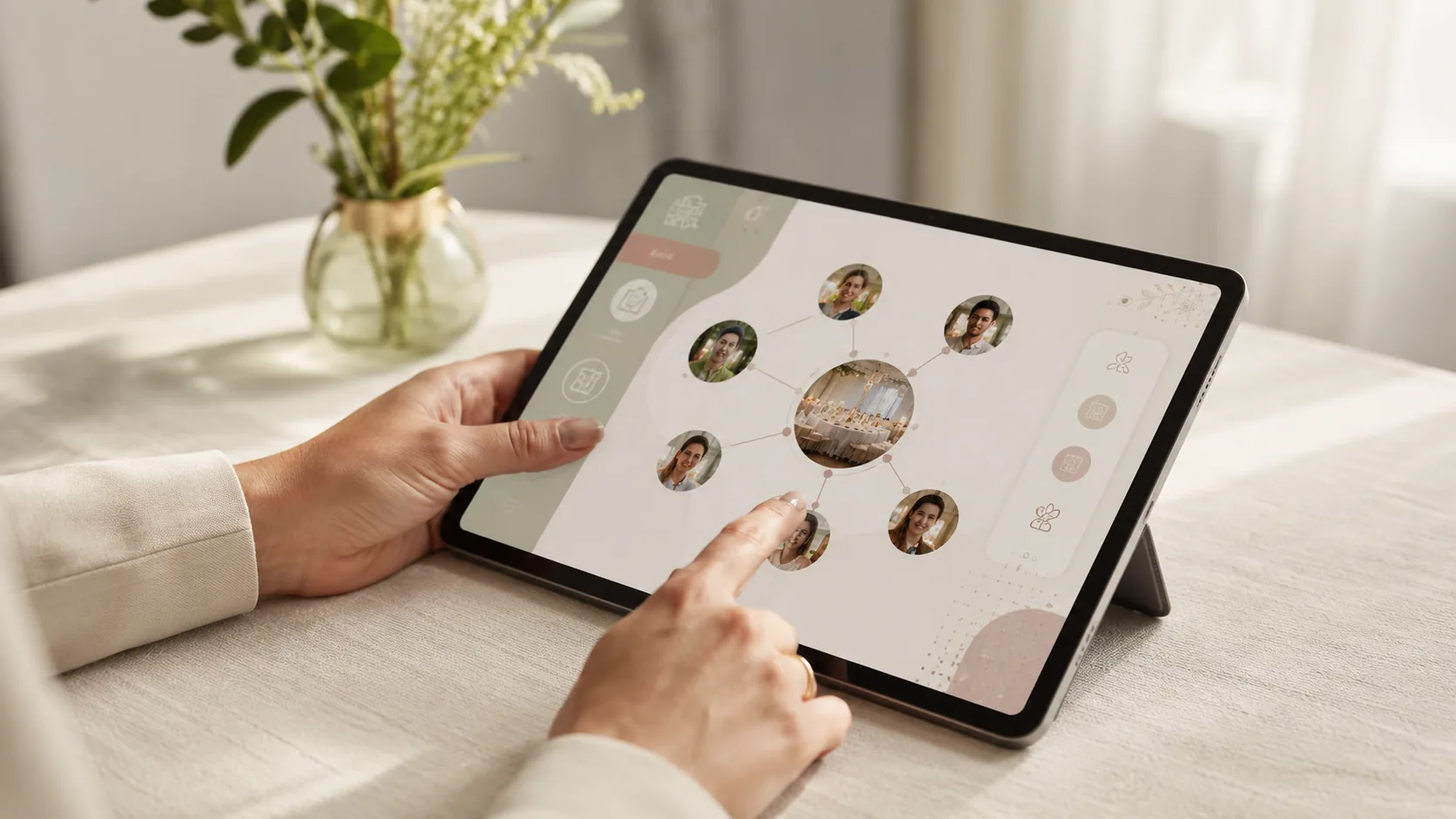
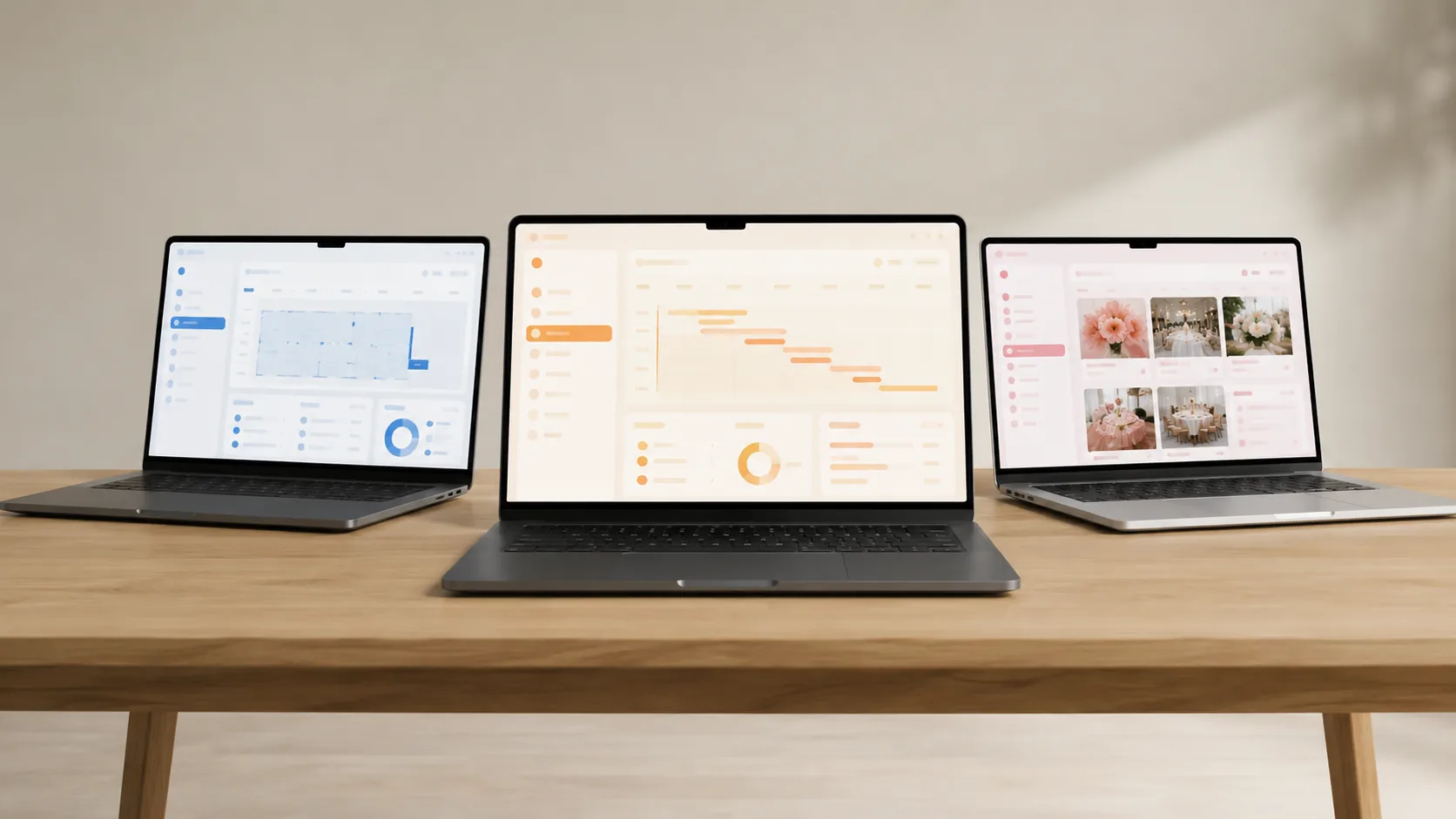
At its core, event management software consolidates the work that would otherwise be spread across spreadsheets, email threads, shared documents, and phone calls. Depending on the platform, that can include guest list management and RSVP tracking, vendor sourcing and communication, budget tracking and payment processing, contract storage and review, timeline and task management, floor plan and seating tools, and client-facing portals for approvals and updates. No single tool does all of these things equally well, and most platforms are designed with a specific type of user in mind.
Tools built for professional planners
Platforms like Aisle Planner, Planning Pod, and HoneyBook are designed primarily for independent professional planners who manage multiple clients. They emphasize client relationship management, proposal and contract tools, and the kind of documentation workflow that a planner needs to run a business, not just a single event. These tools tend to have a steeper learning curve and a monthly subscription cost in the range of $40 to $120 per month depending on the tier.
Tools built for corporate and organizational planners
Enterprise platforms like Cvent and Splash are built for in-house teams at larger organizations. They prioritize compliance documentation, multi-user access controls, vendor management at scale, and reporting capabilities that connect to internal procurement and finance systems. These platforms are significantly more expensive and typically require a sales conversation rather than a self-serve signup. They are the right choice when governance, audit trails, and cross-department coordination are non-negotiable requirements.
Tools built for self-planners
For individuals planning personal events, the landscape is thinner. Most consumer-grade tools cover the basics well: guest lists, RSVP tracking, checklists, and vendor directories. Where they tend to fall short is in budget management, contract review, and the kind of AI-assisted guidance that helps first-time planners understand what they do not know. AI-native platforms are beginning to close this gap by providing contextual guidance throughout the planning process rather than just a set of blank templates to fill in.
All-in-one versus specialized tools
A common pattern among planners who have been in the industry for a while is a stack of specialized tools: one for contracts, one for guest lists, one for vendor communication, one for invoicing. This works, but it creates friction. Information lives in multiple places, and keeping everything in sync across tools requires effort that could be spent on the event itself. All-in-one platforms trade some depth in individual features for the convenience of having everything in one place. Whether that trade is worth it depends entirely on how many events you are managing and how much complexity each one carries.
The role of AI in modern event management platforms
AI features have become a real differentiator in event management software over the past two years, not as a marketing label but as a functional capability. The most useful AI applications in this category include contract analysis that flags unusual or risky clauses, vendor matching that surfaces relevant options based on event type and budget, and timeline generation that builds a working plan from a set of inputs rather than requiring the planner to build it from scratch. These features are most valuable for planners who are managing high volumes of work or navigating unfamiliar territory.
The right tool depends on who you are and what you are planning. A single personal event does not require a professional platform. A portfolio of 10 active client events almost certainly does. Wherever you fall, the test is simple: if you are spending more time managing your tools and your information than you are spending on the actual event, something needs to change.